

Hi everyone!
I have a big update today. After a year and a half of work on the “RAG Techniques” repository on GitHub (27K stars), which is used by hundreds of thousands of developers, I finally finished the book version.
I want my subscribers to get the maximum benefit from this launch. For the first 24 hours, the Kindle version is 0.99 dollars. This is the lowest price Amazon allows. After tomorrow, the price will go up to the standard rate.
The book has 22 chapters. It covers everything from the basics to advanced topics like Graph RAG and Evaluation. I added many illustrations and decision guides to help you choose the right technique for your specific data.
If you enjoy the content and want to support the project, leave a 5-star rate and a nice written review.
Reviews are very important during the first day. They tell the Amazon algorithm that this book is helpful for developers. This support allows me to keep the repository updated and create more content for you.
Thank you for being part of this journey.
Nir
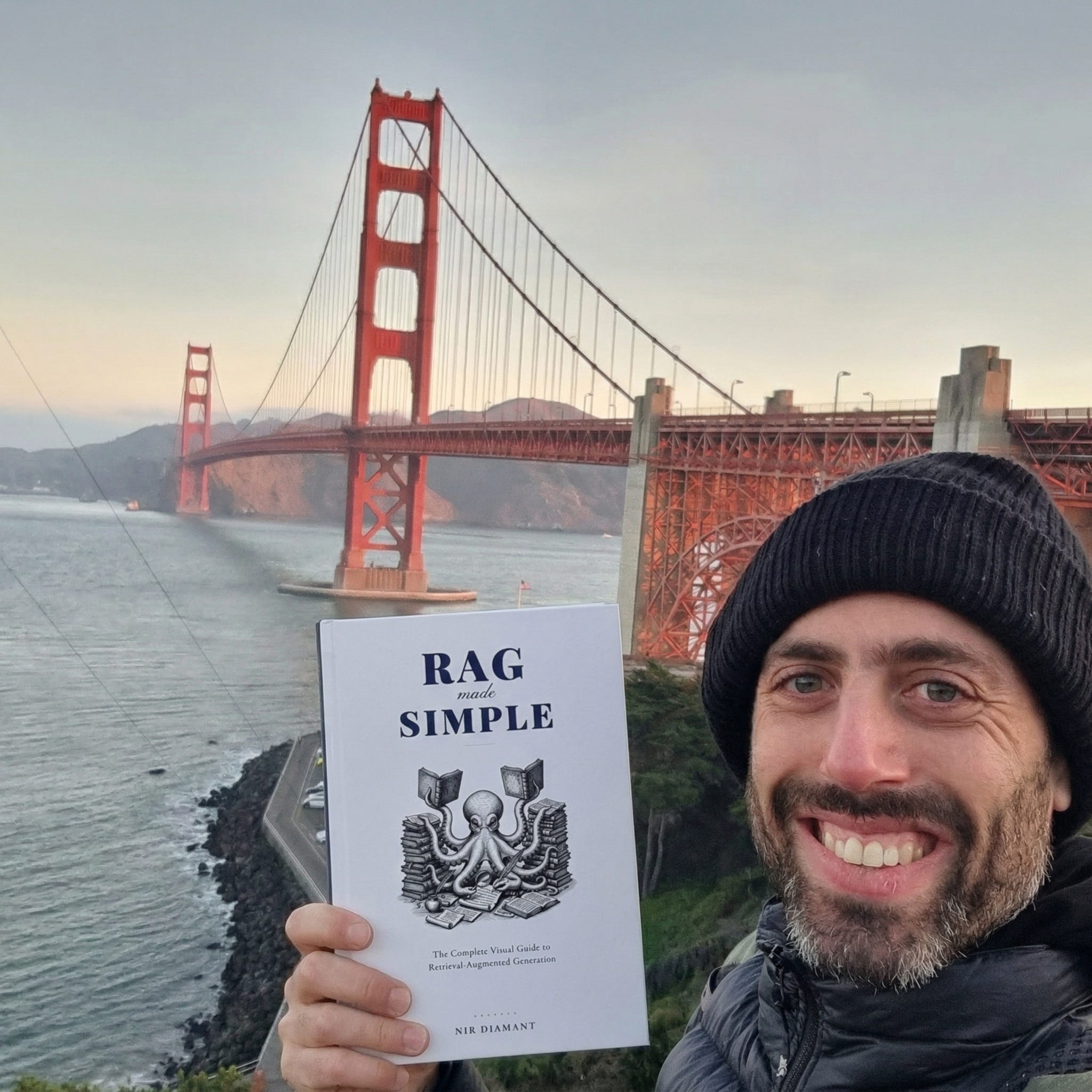
Read to chapter two (table RAG) over breakfast.
Question: for tables in a relational db where information is split across tables, i aussume I'd want to join them do that records of a transaction would contain information instead of a bunch of keys. This will naturally infltate the serialized docs and result in a rag db that'll take up large storage space.
I'm thinking that once the embedding vectors are created, I'd want to throw away the serialized docs and save the embeddings into the db in a rable that contains records of embedding and jeys into tables from where the data was pulled from to create the embedded doc.
What do you think? Should this go in the book?
The Good thing about kindle is you can also buy in the us store and it'll be shipped tarrif free to you where you are